Environmental Management Activities
Environmental Management System
The JFE Group companies work to prevent environmental risks and continuously improve environmental performance through their environmental management systems. As part of these efforts, they promote ISO 14001 certification, the international standard for environmental management systems, with the aim of strengthening voluntary and ongoing environmental activities. In accordance with the requirements of ISO 14001, each registered organization reviews its environmental policy, compliance with legal requirements, achievement of targets for the previous fiscal year, and activity results. Each organization then formulates environmental targets and action plans for each fiscal year and communicates them throughout the organization.
Progress toward achieving environmental targets is periodically reported and reviewed, while implementation status and results are confirmed through internal audits and other means as necessary.
Annual activity results are evaluated through management reviews to confirm effectiveness, while issues and opportunities for improvement are reflected in the environmental targets and action plans for the following fiscal year to drive continuous improvement.
All production sites of JFE Steel and JFE Engineering, as well as JFE Shoji’s major offices in Japan and overseas, have been certified, encompassing 64% of the 44,303 employees at the 82 companies covered in this report and 42% of all sites. In FY2025, there were no major violations of environmental laws or regulations by any of these companies (air, water, soil, etc.) that resulted in a fine or other penalty. Total fines and penalties were 0 yen.
For quantitative data related to ISO 14001 for each business, please refer to:
ST Environmental Committee and Environment Management Committees Provide Appropriate Management Supervision
JFE Steel maintains Environment Management Departments at its head office and in each business office, as well as an Environmental Committee under the Sustainability Council, which is chaired by the president, and Environment Management Committees in each local office. In addition, the Management Committee deliberates and sets materialities and KPIs, including those related to the environment, and evaluates performance.
EN Environmental Committee Oversees Environmental Management
JFE Engineering maintains an Environment Management Department at each of its major locations, including production sites and branch offices as well as all divisions in charge of products. The Environmental Committee, chaired by the president, oversees environmental management for the entire company. Under its Environmental Management System, JFE Engineering works to minimize environmental impact at production sites, branch offices and construction sites and contribute to environmental protection through all products and services. The major strategies for FY2026 are (1) promote environmental contribution through products for mitigating global warming and climate change, (2) promote environmental protection, effective energy conservation, and resource recycling in business activities, and (3) ensure thorough compliance with environmental laws and regulations. These strategies are incorporated into related operations and implemented accordingly.
SH Expand ISO 14001 Certification Acquisition Coverage
JFE Shoji obtained ISO 14001 certification for its head office, Osaka branch, and Nagoya branch in 2000 and later expanded the scope of certification to all domestic offices. JFE Shoji also applies the same environmental management system to its domestic group companies, promoting the same environmental management activities and striving for the same certification. Overseas coil centers are also working to obtain ISO 14001 certification.
Environmental Audit
In addition to the regular internal and external audits at ISO 14001-certified sites, the audit and environment departments at each operating company’s head office conduct independent environmental audits at their production sites once a year.
ST Conduct Detailed Audits
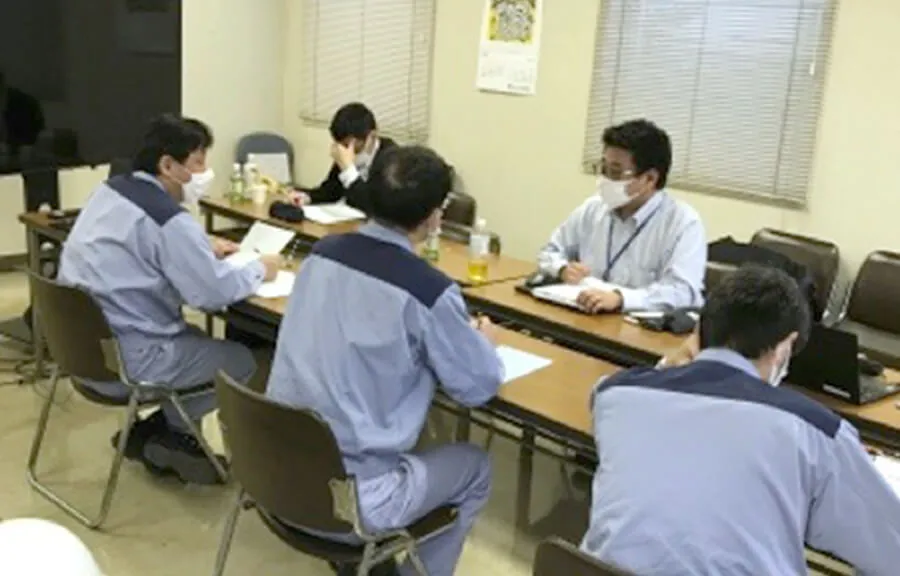
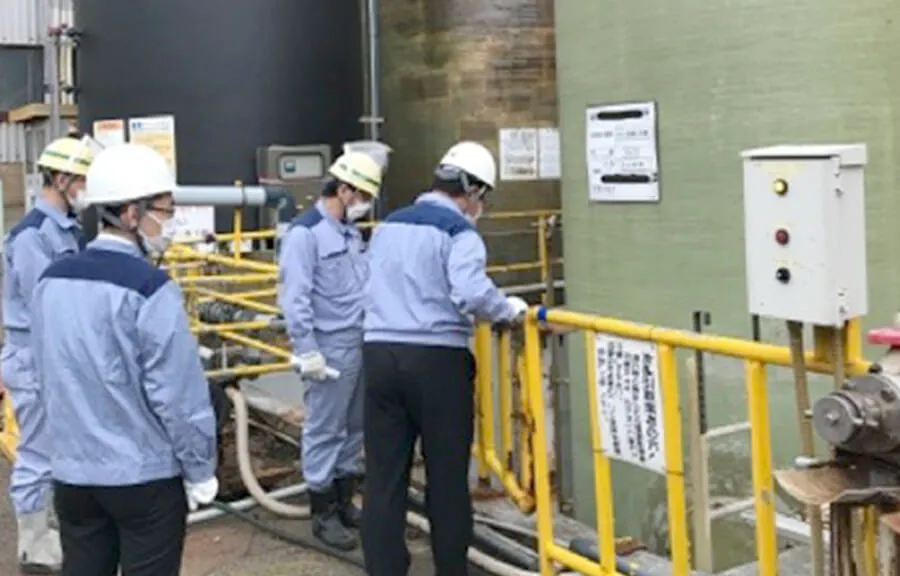
Once a year, JFE Steel’s Audit Department and the Environment, Disaster Prevention and Recycling Department conduct an environmental audit at each operational site. JFE Steel categorizes Group companies based on the result of risk assessment taking into account their equipment and other factors, and it conducts detailed audits every one to five years using checklists.
In FY2025, we conducted audits of 20 Group company sites.
EN Conduct Audits to Confirm Compliance with Environmental Laws and Regulations
JFE Engineering places top priority on complying with environmental laws and regulations.
For JFE Engineering’s production sites in Japan (Tsurumi, Tsu, and Kasaoka), the Safety and Environment Department conducts environmental law compliance audits as well as internal audits of the environmental management system. In addition, the department annually audits about 50 locations selected from construction sites in Japan and Group companies to confirm compliance with environmental laws and regulations. Furthermore, at JFE Engineering, internal audits are conducted at approximately 70 locations annually (including about 30 construction sites and plant operation sites) to evaluate the effectiveness of initiatives for improving environmental performance and take remedial action. Annual environmental inspections to confirm compliance with environmental laws are conducted for each construction project by the responsible departments, and self-checks of legal compliance are carried out every year at production sites (Tsurumi, Tsu, and Kasaoka).
SH Conduct Internal Audits and Environmental Audits
The JFE Shoji Group conducts internal environmental audits once a year for its ISO 14001-certified group companies, and environmental audits are conducted once every three years for non-certified group companies to confirm on-site compliance with laws and regulations. In FY2025, we conducted internal audits of all 54 ISO-certified organizations and environmental audits of 12 non-certified companies.
For quantitative data related to environmental audits, please refer to:
Environmental Education
The JFE Group actively provides education to foster a corporate culture of environmental protection. Education at operating companies includes training for new recruits and newly promoted employees as well as specific environmental-protection training by position and job.
For groupwide environmental training, we hold an annual Review Session on Environment-Related Laws and Regulations, to which lawyers specialized in environment-related laws and regulations are invited to give lectures on the latest information related to the enactment and revision of these laws, as well as associated violations and court decisions. Employees from wide-ranging departments, including the environment, disaster prevention, legal affairs, general affairs, and manufacturing departments of the operating companies and their group companies, who are involved in environment-related activities, attend these annual sessions as the basis for planning their activities, such as educating employees and raising awareness of environmental laws and regulations across the Group.
ST Promote Acquisition of Pollution-Control Manager Qualifications
JFE Steel encourages employees to obtain qualifications as pollution-control managers, and it implements a training program for environmental managers at Group companies. JFE Steel also provided employees with training to ensure compliance with environmental laws, disseminated information about regulatory revisions at its Environmental Liaison Committee meetings for Group companies, and organized brush-up training in waste management skills for on-site personnel.
EN Provide General Environmental Education
JFE Engineering educates all employees, including those at its group companies, about environmental issues to increase their understanding of the company’s policies and initiatives. To ensure proper environmental management at production and construction sites, training is often tailored to specific employee operations, helping to enhance their capabilities. In FY2025, we improved the video materials distributed for environmental law education to make the content easier to understand.
SH Provide General Environmental Training and Specialized Training for Internal Auditors
JFE Shoji provides all employees with general environmental training in compliance with ISO 14001 and specialized training for internal audit staff. All employees within the scope of certification receive a pocket-size ISO Employee Card to carry with them so they can check the details of ISO 14001 activities at any time. In addition, each company performs a self-check using its own extensive checklist to ensure understanding and rigorous compliance with environmental laws. Also, JFE Shoji provides environmental training to new executives and information about revised laws and regulations to environmental management personnel.
Environmental Impact Reduction Initiatives
The JFE Group regards co-existence and mutual prosperity with local communities, the global environment, and society at large as a critical managerial challenge in terms of business continuity. It strives to control air and water pollutant emissions and aggressively invests in environmental protection. Related internal controls and education are steadily being strengthened as well. Also, the transfer and widespread application of proprietary technologies, mainly in developing countries, contribute to pollution prevention on a global scale.
For quantitative data related to reducing environmental impact, please refer to:
Controlling Air Emissions
ST Initiatives to Further Reduce SOx and NOx Emissions
JFE Steel is installing low-nitrogen oxides (NOx) burners in reheat furnaces, switching to low-sulfur fuels, and deploying desulfurization and denitration devices in sintering plants, all major sources of sulfur oxides (SOx) and NOx emissions. It has concluded agreements with local administrations that stipulate conditions that are stricter than the total volume restrictions required by the Air Pollution Control Law. The company is continuing to further control emissions at a level that is less than the amount set forth in the agreement. In addition, the company suppresses dust dispersion through measures that include enhancing on-site cleaning, installing sprinklers and windbreak fences in raw material yards, and improving the performance of dust collectors.
EN Appropriate Management in Place to Restrict SOx and NOx Emissions
To ensure compliance with the Air Pollution Control Law and relevant local regulations, JFE Engineering properly manages facilities that emit soot and smoke at its Yokohama head office, Tsurumi works, and Tsu works, so NOx and SOx emissions from those facilities are maintained at a level sufficiently lower than the total annual volume restriction (NOx: 18,000 Nm3, SOx: 100 Nm3).
Environmental protection efforts are underway at construction sites and plant operation sites through the exclusive use of construction machinery and on-site vehicles in compliance with the Automotive NOx and PM Law and the Act on Regulation, Etc. of Emissions From Non-road Special Motor Vehicles (Off-Road Vehicle Law).
In addition, we strive to prevent leakage at the Yokohama head office, Tsu works, and Kasaoka Monopile Factory and at temporary locations such as construction sites by inspecting equipment using fluorocarbons and ensuring proper disposal in accordance with the Fluorocarbons Emission Control Act.
Management of Chemical Substances and Emission Control
ST Initiatives to Reduce VOC Emissions
JFE Steel lowers its environmental impact by voluntarily reducing the chemical substances it releases. Release and transfer amounts of substances subject to Japan’s Law concerning Pollutant Release and Transfer Register (PRTR Law) are reported in accordance with the law.
The Japan Iron and Steel Federation formulated a voluntary action plan to reduce VOC emissions by 30% from FY2000 levels by FY2010. As part of this action plan, JFE Steel set a target for reducing emissions to 1,078 tonnes or less. As a result of our initiatives, we achieved a significant reduction that exceeded the 30% reduction target in FY2010 and have been consistently cutting VOC emissions by more than 50%, with reductions exceeding 60% since FY2020. Going forward, we will continue to maintain emissions at 1,078 tonnes or less and take the necessary steps to prevent any increase.
Emissions of benzene and dichloromethane are kept at low levels. We will continue to set targets for the two substances and maintain low emissions levels.
EN Management of Chemical Substances in Accordance with the PRTR Law
Major chemical substances subject to the PRTR Law for the JFE Engineering works in Tsurumi, Tsu, and Kasaoka include organic solvents such as xylene used for painting products, and manganese and its compounds generated during welding. We report the release and transfer amounts of these substances in accordance with the law.
PCB Waste Management at JFE
Polychlorinated biphenyl (PCB) waste is properly stored and managed at the JFE Group’s facilities. High-concentration PCB waste has been treated under the guidelines set by the Japan Environmental Storage & Safety Corporation (JESCO), and the treatment is almost complete. Low-concentration PCB waste is being treated under contracts with certified detoxification contractors. The Yokohama Eco Clean Plant of J&T Recycling Corporation treats insulating oil contaminated with slight amounts of PCB, helping to reduce pollutants both in and outside the JFE Group.
Environmental Accounting
Basic Policy
The JFE Group is saving energy and reducing its environmental impacts by making its production facilities increasingly efficient and introducing more environmentally friendly equipment. Any equipment or facilities related to energy conservation and environmental protection are categorized as environmental investment, while all activities related to environmental protection and impact reduction are categorized as environmental expenses. Through these environmental investments and expenses, we are working to lower unit-based CO2 emissions to prevent global warming and to reduce final-disposal waste by maintaining a high recycling rate to effectively use natural resources. We are also striving to reduce emissions of pollutants into the water and air, which contributes to environmental protection and ensures thorough compliance with statutory regulations concerning exhaust gas emissions and discharged water.
For quantitative data related to environmental accounting, please refer to: