Message from the CEO

The JFE Group will play an indispensable role in supporting people’s daily lives, driving sustainable development and ensuring safe, comfortable lives for all.
September 2025
Yoshihisa Kitano
Representative Director, President and CEO
JFE Holdings, Inc.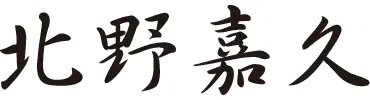
JFE Group’s Aspiration
In a business environment facing challenges never before experienced, the JFE Group has sought to enable every employee to reflect on the purposes of their business and organization, as well as their individual purposes, and to envision what they wish to become over the long term. To this end, each operating company defined its purpose, and based on these, we formulated the Group’s long-term vision, JFE Vision 2035.
Over the years, we have been steadfastly advancing sustainability initiatives focused on climate change as well as essential economic issues for the Group’s sustainable growth. JFE Vision 2035, grounded in our newly articulated corporate purposes, sets out two Groupwide aspirations for the future: becoming the top runner in carbon neutrality technology development and expanding consolidated business profit (Segment profit: ¥700 billion).
Pursuing greenhouse gas (GHG) reduction and carbon neutrality are essential chalenges that humanity must address to continue living comfortably on this planet. The growing frequency of extreme weather events serve as a reminder of how global warming is intensifying, which makes addressing climate change one of the most critical challenges of our time.
By our calculations, achieving carbon neutrality by 2050 will require investing a trillion yen to reduce GHG by fiscal 2035, and around 4 trillion yen between fiscal 2036 and fiscal 2050. This will require expanding our business profit and bolstering our financial base. We set a segment target of 700 billion yen for fiscal 2035 in JFE Vision 2035 to generate the required profit for these investments. Pursuing initiatives for environmental and social sustainability is our mission, and we believe this will lead to corporate economic growth.
In our Sustainability Report 2025, we will introduce readers to the JFE Group’s initiatives for sustainable growth.
Our Sustainability Initiatives
Under the Eighth Medium-term Business Plan, which began in fiscal 2025, we are striving Groupwide to proactively facilitate the transition to a circular economy and support biodiversity conservation and nature positive, in addition to addressing climate change as a top-priority business issue under the previous medium-term business plan.
The Japanese government is maintaining its basic stance of ensuring the competitiveness of Japanese industry by achieving carbon neutrality by 2050 and the GX2040 Vision for promoting green transition toward 2040. In the steel business, we are considering the implementation and economic viability of new process technologies as the fundamental premise for achieving carbon neutrality by 2050. To this end, JFE is determined to develop and swiftly implement ultra-innovative technologies to produce high-quality steel, which is our core strength. I believe that a paradigm shift will occur in which all products, including steel, will become eco-friendly. Gaining recognition for the environmental value of green steel will be crucial during this paradigm shift. So we are also pursuing the establishment of an international standard that incorporates environmental value as a prerequisite for expanding overseas demand for green steel, and Japan should lead the way in this effort. The Japan Iron and Steel Federation has already created a guideline on green steel as the basis for the world steel guidelines for GHG chain of custody approaches in the steel industry announced in 2024, and work is being done to revise the GHG Protocol and standardization within the ISO. It is also important for the Japanese steel industry to be the driving force for these initiatives. More details are provided in the “Policy Engagement” section of this report.
Meanwhile, the world population quadrupled from 1.5 billion to 6 billion in the 20th century, reached 8 billion by 2023, and is projected to ultimately surpass 10 billion. This scale of population growth has released a tidal wave of challenges for humankind in areas such as resource depletion, food insecurity, environmental degradation, and growing inequality. Given these pressures, the transition to a circular economy is essential to maintain a comfortable way of life. Activities for realizing this transition will constitute a major framework of JFE Vision 2035 and the Eighth Medium-term Business Plan. In managing the Earth’s limited resources, greater emphasis will be placed on the three Rs-“Reduce” use to a minimum, “Reuse” repeatedly, and “Recycle” for effective use in other forms-to sustain comfortable lifestyles. Recognition of these challenges has heightened public awareness of the need to transition to a circular economy.
In addition to the steel and trading businesses, the JFE Group also engages in engineering, and it is leveraging this strength to facilitate the transition to a circular economy.
For example, our steel business offers products as “Reduce” initiatives, such as high-performance electrical steel sheets and high tensile strength steel sheets for automobiles that require fewer additional resources by extending product life cycles and saving energy, as well as highly corrosion-resistant steel plates and anti-fatigue-damage steel plates that decrease the consumption of virgin resources by extending the longevity of infrastructure. Our steel manufacturing process will support the shift to electric arc furnaces and expand the use of scrap. Moreover, the development of technologies, such as an innovative electric arc furnace for production of high-quality steel that will be constructed in the Kurashiki district, will expand “Reuse” by broadening the use of scrap and its transformation into new products. At the same time, it will reduce GHG by using less coal. Our engineering business will promote “Reuse” and “Recycle” initiatives through bottle-to-bottle, plastic recycling, food recycling, and waste-to-energy power generation ventures. In the trading business, we will construct a supply chain for products that “Reduce” and disseminate “Reuse” and “Recycle” initiatives throughout society by supplying scrap materials and collecting waste. The three Group companies will also collaborate further to provide their respective products and technologies to society.
These initiatives for addressing climate change and the transition to a circular economy also contribute to biodiversity conservation and nature positive. We will deepen our awareness of how Group business activities depend on and impact biodiversity and natural capital. In addition to reducing risks, we will adopt diverse approaches, including collaborations with local communities and the supply chain, to actively expand sales of steel slag products, develop nature-positive products and technologies, plant trees at our business sites, and create and open biotopes to the community.
These initiatives for climate change, transitioning to a circular economy, biodiversity conservation, and nature positive depend upon the power of our employees. The collective efforts of employees with diverse backgrounds and aspirations will be vital during this time of unprecedented transformation and need to adapt to change across society and in the business environment, to achieve sustainable growth in an era that demands carbon neutrality. My main mission is to support these efforts by turning JFE into a more attractive company where employees fully demonstrate their talents and work with enthusiasm. In JFE Vision 2035, we formulated a long-term human resources strategy that links corporate growth and employee growth. We will continue to focus on enhancing employee engagement and advance initiatives for improving work engagement, promoting talent acquisition, and promoting diversity, equity and inclusion (DEI).
With the recognition that contributing to the realization of a society in which the human rights of each and every individual are respected and protected is not only a corporate social responsibility but also a foundational principle of management, we are particularly committed to upholding respect for human rights across the supply chain as a key management concern. In addition to providing education and training for employees, we will continue to promote risk management at suppliers and Group companies and expand human rights due diligence.
To Our Stakeholders
The JFE Group, through the concerted efforts of all employees, will establish its position as a company essential to society’s sustainable development and create safe and comfortable lives for people everywhere. To this end, we will steadfastly ensure thorough legal and regulatory compliance. At the same time, the Group will work in concert to address environmental issues such as climate change, transition to a circular economy, and also address biodiversity conservation and nature positive as well as social issues such as occupational health and safety, DEI, and respect for human rights.
Sustainability Report 2025 presents current and prospective stakeholders with a comprehensive overview of our initiatives for achieving sustainable growth. I hope it will deepen understanding of the JFE Group’s efforts, and I look forward to your candid feedback and continued support of the JFE Group as we move forward together.